Skip to content
Non-Invasive Blood Pressure Tips
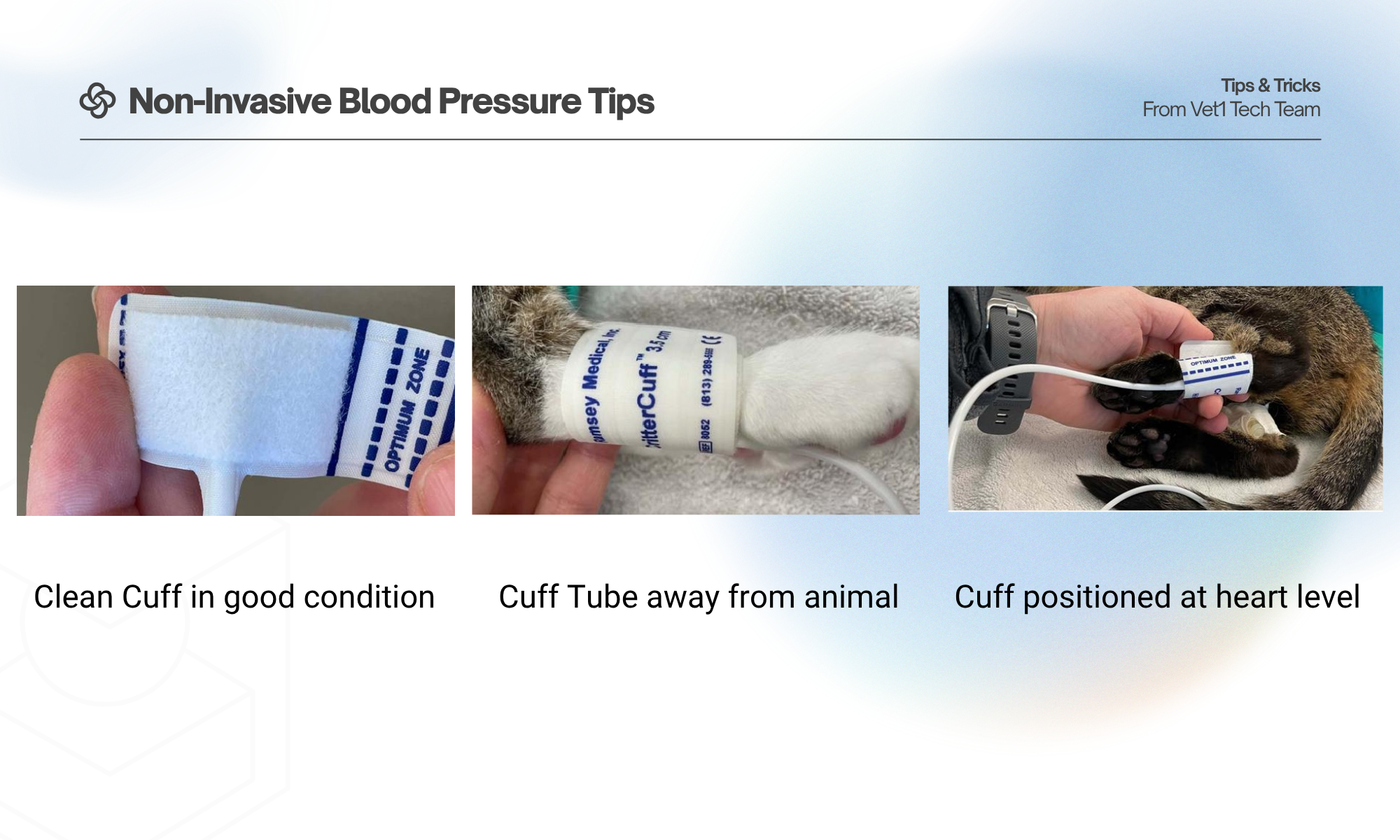
For accurate veterinary non-invasive blood pressure (NIBP) readings, ensure the correct cuff size (30-40%) of circumference for dogs/cats), position the cuff correctly over the artery at heart level, and take readings in a quiet area. Always disregard the first reading and average 3-5 subsequent, consistent readings to minimize the effects of stress and movement.
Environment
• Conduct in a calm, quiet room away from other animals
• Use quiet clippers to shave fur to detect blood flow where the bladder of the cuff lies
Cuff Selection and Placement
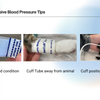
• Measure cuff for every patient each time BP is checked
• Cuff width should be 30%-40% the circumference of the limb or tail which it is applied
• Some cuffs show “optimum zones” to help determine the 30%-40% circumference
• Use a flexible metric ruler to measure circumference
• A cuff that is too large falsely decreases readings
• A cuff that is too small falsely elevates readings
• Oscillometric: cuff may be placed mid-radius on forelimb, mid-tarsus on hindlimb, or tail base
• Select a limb positioned at heart level whenever possible:
Cuff placement above the plane of the heart falsely decreases readings
Cuff placement below the plain of the heart falsely increases readings
• If in lateral recumbency, use the nondependent leg
• Tail is preferable for HDO and cats with osteoarthritis (seniors) or cats with sensitive paws
• Ensure the inflation tube is positioned over the artery to be occluded– shaving is recommended for best results
Useful Tips
• Insure you have selected the correct parameters on your monitor (breed, weight & cuff size)
• Shaving the area where the bladder of the cuff lies helps with conductivity.
• Some White & Opaque NIBP Cuffs are disposable. Stretched & worn cuffs can affect accurate readings. Use the Black Reusable Cuffs for longevity & accuracy.
• Make sure there are no leaks in your NIBP Hose Connectors both at the monitor side & the cuff side.